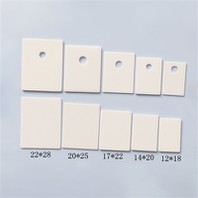
In the automotive industry, advanced ceramics contribute to the development of high-performance components. Ceramic matrix composites (CMCs) are employed in the production of brake discs as they exhibit superior wear resistance and thermal stability compared to traditional materials. Additionally, ceramics are used in engine components, such as spark plugs and diesel engine glow plugs, benefiting from their high melting points and resistance to thermal shock.
The medical field also leverages advanced ceramics for various applications. Bioceramics, which include materials like alumina and hydroxyapatite, are used to make bone implants and dental prosthetics because they are biocompatible and can work with living tissues. Advanced ceramics are also employed in medical imaging technologies, such as X-ray tubes and ultrasound transducers, where their electrical and thermal properties contribute to the precision and efficiency of the devices.
The aerospace industry relies heavily on advanced ceramics for their lightweight and high-temperature capabilities. Components like turbine blades in aircraft engines often incorporate ceramics to withstand the extreme conditions of combustion and contribute to fuel efficiency. Moreover, heat-resistant tiles on the surface of spacecraft, such as the space shuttle, are made from advanced ceramics to protect against the intense heat generated during re-entry into Earth's atmosphere.